

-
Flame Rollout: The Old Furnace Warning Sign Every Homebuyer Should Know
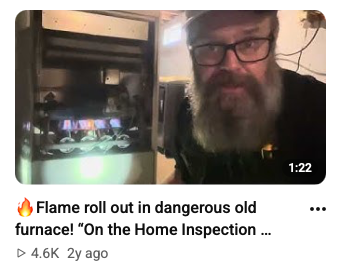
Most homebuyers never look closely at a furnace. They check that it turns on, hear it run for a minute, and move on. But a furnace can show clear signs of failure that an experienced eye picks up immediately.
During a recent inspection, I came across a 49-year-old gas furnace with black soot streaking up the side. That soot is not dirt. It is evidence of flame rollout, one of the most dangerous things a furnace can do.
If you are buying an older home, here is what flame rollout is, why it matters, and how to spot it before it costs you thousands or worse.
Watch the Inspection
https://www.youtube.com/watch?v=OZLURBDaeq0
Key Issues Found in This Inspection
- A 49-year-old gas furnace at the end of its service life
- Visible black soot on the furnace caused by flame rollout
- Flames escaping the burn chamber instead of staying contained
- Possible blocked flue, uncombusted gases, or a cracked heat exchanger
- Air starvation causing flames to grow and roll outward
What is Flame Rollout?
In a properly working gas furnace, the burner flames stay neatly inside the firebox. They burn the gas cleanly, the heat exchanger transfers warmth to your home's air, and the exhaust gases vent safely outside.
Flame rollout is what happens when those flames escape the firebox and roll out into the surrounding furnace cabinet.
This is not a minor issue. It is a sign that combustion inside the furnace is failing. The flames are looking for oxygen they cannot find in the firebox, and they roll outward to find it. In doing so, they can scorch nearby materials, melt wiring, and damage the furnace components that are supposed to keep dangerous gases out of your home.
Why Flame Rollout Matters for Homebuyers
There are two main risks to understand:
1. Fire risk
Flames escaping the furnace can ignite dust, lint, or anything stored too close to the unit. Older furnaces in tight basement spaces are especially at risk.
2. Carbon monoxide risk
Flame rollout often goes hand in hand with a cracked heat exchanger or a blocked flue. When the heat exchanger cracks, exhaust gases (including carbon monoxide) can leak into your home's air supply and be circulated through every room.
Carbon monoxide is invisible, odorless, and deadly. This is why homes with older furnaces should always have working CO alarms, and why a furnace showing flame rollout needs immediate professional evaluation.
What This Means for You as a Buyer
A gas furnace typically lasts 15 to 25 years. Past that point, you are running on borrowed time. A furnace nearing 50 years old is not just inefficient. It is a candidate for failure.
If you see soot, scorch marks, or any sign of flame rollout during a showing or inspection, this is not a "wait and see" issue. It is a safety concern that needs to be addressed before you take possession.
Practical next steps:
- Have a licensed HVAC technician evaluate the furnace before closing
- Get a quote for replacement so you know what you are walking into
- Use the cost as a negotiation point with the seller
- Confirm there is a working carbon monoxide alarm on every level
Furnace replacements typically cost several thousand dollars depending on the size of the home and the system installed. That number should be in your buying decision, not a surprise three months after move-in. Older homes often have other systems nearing end of life too, like aluminum wiring, knob and tube wiring, or vermiculite insulation in the attic.
What to Look For in an Older Furnace
Use this checklist when viewing or inspecting a home with a gas furnace:
- Black soot marks around the burner area or on the front of the furnace
- A furnace older than 20 years (check the manufacturer date plate)
- Yellow, orange, or flickering flames (a healthy gas flame is steady and blue)
- Rust, corrosion, or scorch marks on the metal panels
- A loud, rumbling, or irregular operating sound
- Carbon monoxide alarms that are missing, expired, or have gone off in the past
- A musty or burning smell when the furnace runs
If you see any of these, get a qualified HVAC professional involved before you close.
FAQ: Flame Rollout and Old Furnaces
What is flame rollout in a furnace?
Flame rollout is when the flames inside a gas furnace escape the burn chamber and roll outward into the cabinet. It is caused by issues like a blocked flue, a cracked heat exchanger, or a lack of combustion air, and it creates a fire and carbon monoxide hazard.
How long does a gas furnace last?
Most gas furnaces last between 15 and 25 years. Past 20 years, efficiency drops, repair costs climb, and safety risks increase. Furnaces over 25 years old should be considered end-of-life regardless of how they appear to be running.
Is a 40-year-old furnace safe?
A furnace that old is well past its expected lifespan and should be evaluated by a licensed HVAC technician immediately. Even if it appears to run, internal components like the heat exchanger may be cracked or compromised. Replacement is usually the safer and more economical choice.
What does soot on a furnace mean?
Black soot on or around a furnace is a sign of incomplete combustion or flame rollout. It indicates the furnace is not burning gas cleanly, which is both a safety issue and a sign the system is failing. Have it inspected before using it further.
Should I replace the furnace before buying the house?
If the existing furnace shows flame rollout, soot, scorching, or is over 20 years old, factor a replacement into your offer or negotiation. Either ask the seller to address it, request a credit, or budget for replacement shortly after closing.
Final Thoughts
A furnace is one of the most overlooked safety items in a home. It works quietly in the basement, and most buyers never give it a second look. But the cost of ignoring a failing furnace, both in dollars and in safety, is much higher than the cost of catching it during an inspection.
When I inspect a home, the furnace gets a real evaluation, not just a glance. If it is showing signs of failure, you will know about it.
If you are buying an older home in Canada and want a thorough inspection that catches the things others miss, get in touch. I work for you, not the deal.
Book Your Inspection
Get a clear, honest evaluation of every major system in the home you are buying. Book an inspection with HAT Property Inspections.